Indoor Cat Enrichment Toys: Best Picks & Rotation Tips
Q: What are some good enrichment toys for indoor cats?
A: The best enrichment toys for indoor cats mimic hunting, climbing, and problem-solving—without turning your home into chaos. Our team recommends building a small “toy rotation” so your cat stays curious: keep a few options out for 3–5 days, then swap them with stored toys to make everything feel new again. For more ideas and deeper recommendations, visit our main guide: What are some good enrichment toys for indoor cats?.
A: Enrichment toys that keep indoor cats engaged
Interactive wand toys (prey-style play)
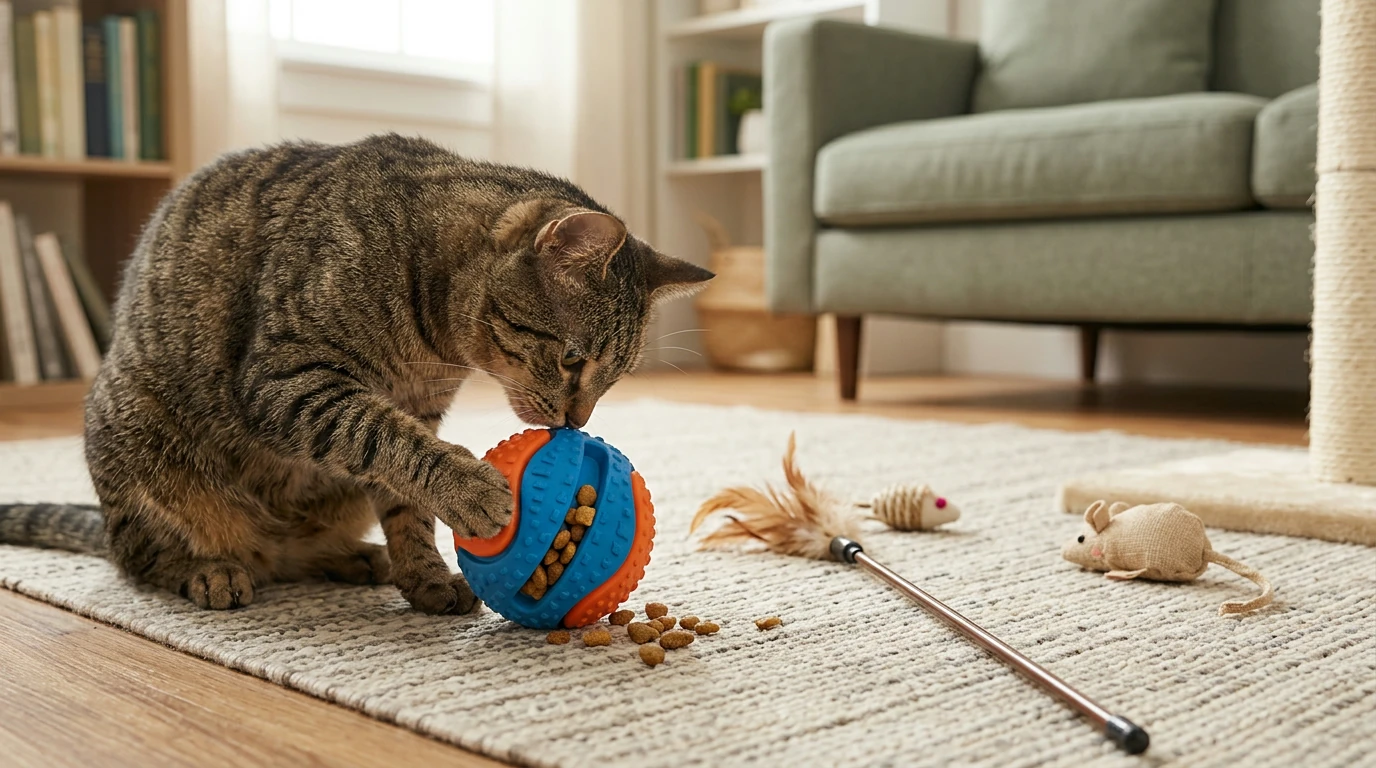
Feather teasers, ribbon wands, and lure-style attachments encourage stalking, pouncing, and chasing. Choose sturdy wands with a long handle and rotate attachments to prevent boredom. End sessions with a “catch” so your cat feels successful and less likely to nip hands later.
Food puzzles and treat-dispensing toys
These turn snacks or meals into a satisfying hunt. Start with easy, wide openings, then progress to tighter or more complex puzzles as your cat learns. Use part of daily kibble to avoid overfeeding and keep motivation high.
Battery-free chase toys (track balls and rollers)
Ball-in-track rings and slow-rolling wobble toys are great for solo play and quick bursts of activity. Look for enclosed tracks and larger balls that can’t be swallowed, especially in multi-pet homes.
Catnip and silvervine kickers
Kicker toys let cats bunny-kick, wrestle, and chew—excellent for stress relief. If catnip doesn’t work for your cat, silvervine can be a strong alternative. Choose tightly stitched fabric and remove toys that start to fray.
Crinkle tunnels, paper bags, and pop-up cubes
Hide-and-pounce setups create “ambush” opportunities that indoor cats crave. Opt for tunnels with multiple exits so your cat never feels trapped, and skip bags with handles that could loop around the neck.
Climbing and scratching combos
While not a “toy” in the traditional sense, scratchers with ramps, perches, or corrugated lounges invite daily movement and mark-safe behavior. Offer at least one vertical and one horizontal scratching surface in key rooms.
FAQ
How often should you rotate your cat’s toys?
Rotate toys every few days to keep novelty high and reduce clutter. Keeping only a small selection out at once makes “old” toys exciting again when they return.











Leave a comment